How can I begin Morning Prayer at home?
A practical guide to saying Morning Prayer with the 1662 Prayer Book and Bible: find the psalms, lessons and collect, then follow the service.
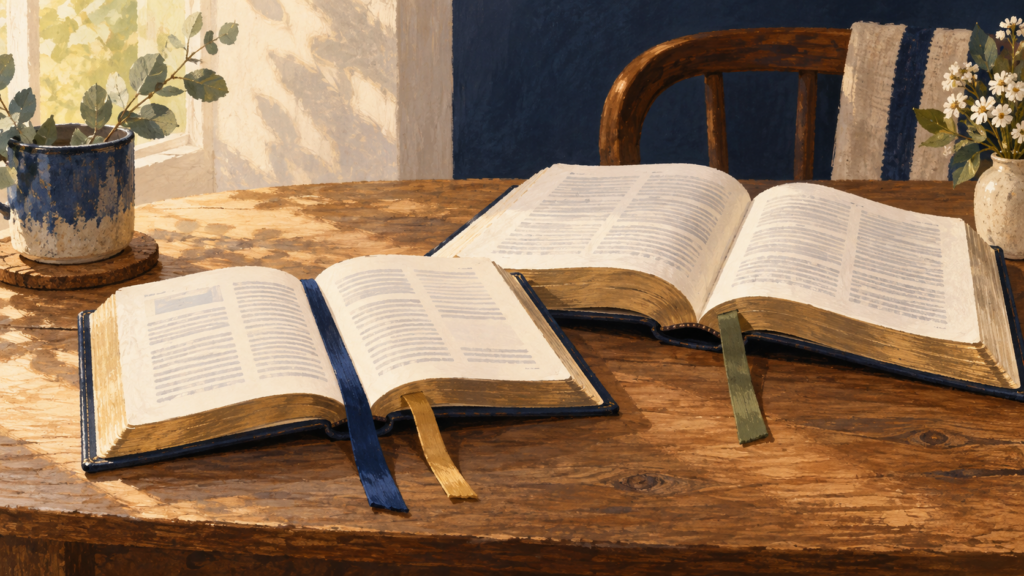
You can say Morning Prayer at home with a 1662 Book of Common Prayer and a Bible. The Prayer Book supplies the order and most of the words; the Bible supplies the two lessons. A few bookmarks will save you from searching for pages halfway through.
CCNA uses the traditional 1662 lectionary for Morning and Evening Prayer. A lectionary is a schedule of Scripture readings. Later revised tables may appear in other books or online services, so check the edition rather than assuming every resource labelled “BCP” will supply the same lessons. We can supply you with the Lectionary that we use.
Set out the day’s pages
Find The Order for Morning Prayer using your book’s contents page. Page numbers vary between editions. Then prepare three places:
- The psalms. In the Psalter, look for the day of the month and its Morning Prayer heading. The ordinary pattern runs through thirty days: the first day’s morning psalms, for example, are Psalms 1–5. Check the table of Proper Psalms for special days rather than assuming the monthly pattern always applies.
- The two lessons. Find the morning readings in the appropriate calendar or table of lessons and mark them in your Bible. A lesson is a Scripture reading. Special days may have their own appointed lessons. These are not simply the Epistle and Gospel printed beside the Sunday collect for Holy Communion.
- The collect. Find the prayer for the Sunday or holy day in The Collects, Epistles, and Gospels. The Sunday’s collect normally continues through the week; a holy day or seasonal direction may change what is used. Mark the collect, leaving the Epistle and Gospel for their own service.
If your book’s tables do not match CCNA’s use, ask the parish to help you identify the correct readings and collect. Bring your book so someone can show you the places you will use again.
Follow the order, returning to your bookmark
The directions printed among the prayers are called rubrics. Read them as instructions, not as additional words to say aloud. The following route helps you move through the 1662 order; keep its detailed directions beside you.
- Begin with penitence. Read one or more of the opening Scripture sentences, then the exhortation and general confession. The absolution is assigned to a priest. If you are a lay person praying alone, omit that priestly pronouncement and continue with the Lord’s Prayer.
- Say the opening responses and praise. Continue through the short exchanges to the Venite, Psalm 95, following the book’s exceptions for particular days. You can say the words; no singing is required.
- Turn to the appointed psalms. Read them from the Prayer Book Psalter. Say the printed doxology, beginning “Glory be to the Father”, after each psalm, then return to Morning Prayer.
- Read the first lesson, then its canticle. A canticle is a song of praise. After the reading, return to the Te Deum or the alternative Benedicite: choose one, rather than reading both simply because both are printed.
- Read the second lesson, then its canticle. Return to the Benedictus or the alternative Jubilate, observing the direction about when the Benedictus has already occurred in the appointed reading.
- Continue with the creed and prayers. Follow the Apostles’ Creed, responses, Lord’s Prayer and further short petitions. At the first collect, turn to the day’s prayer you marked earlier. Return for the fixed collects for peace and grace.
Continue beyond the collect for grace to the intercessions and concluding prayers. The book also gives directions for occasions when the Litany is read, and appoints the Athanasian Creed on certain feast days. Ask the parish for help with these variations as you learn the ordinary pattern.
When you are the only person there
Say both parts of the ordinary responses, including those labelled Answer. Keep the shared language of the prayers: praying alone does not require changing every “we” to “I”. Leave a little silence after a reading or prayer if that helps you attend to it. Use a posture your body can manage.
The first few attempts may involve more page-turning than you expect. Keep the bookmarks in place afterwards, ready to move to the next day’s psalms and readings.
If hearing the pattern would help, CCNA’s Morning and Evening Prayer recordings provide a companion. Choose the office and date in the title. You can also use the book on its own, at your own pace.