Where do I start when a Bible passage puzzles me?
An Ethiopian traveller’s question about Isaiah offers a place to begin when a Bible reading leaves you puzzled.
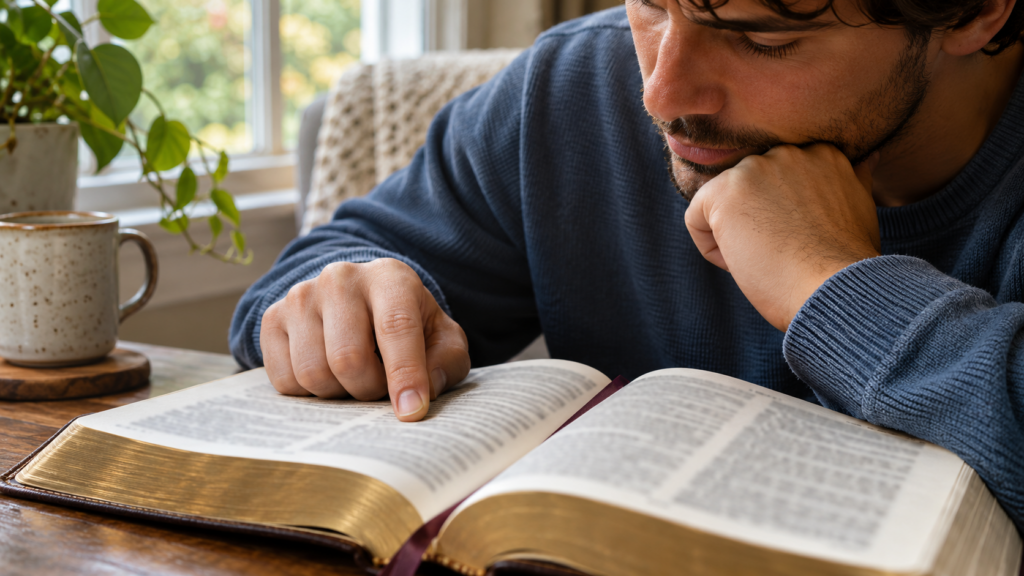
Who is Isaiah talking about? That is the Ethiopian official’s question. As he reads Isaiah on the road home from Jerusalem, he encounters a sufferer compared to a sheep led to slaughter. He can follow the image. What he cannot tell is who this person is. Does the prophet mean himself, or somebody else?
Try reading Isaiah 53:7–8 before you turn to Acts. Notice how quietly the person in the poem endures what is being done to him, and how much the people speaking struggle to understand his suffering. Now imagine trying to explain to a companion whom the passage is describing. The official has put his finger on a real difficulty.
In Acts 8 Philip hears the traveller reading aloud. At the Spirit’s prompting he has come alongside the chariot. The official invites him up to sit beside him, and it is the official’s question that sets their conversation going. Philip begins with the passage already open and tells him the good news of Jesus. Luke gives us no transcript. What we hear next is the traveller’s own voice again: seeing water beside the road, he asks about being baptised.
There is a way of asking for help here that you can borrow the next time a reading in church puzzles you. Keep the actual verse in front of you. Read the sentence on either side. See how much of the difficulty you can put into ordinary words. Perhaps you know who is speaking but cannot see why the next person answers as they do. That is a much easier conversation to begin than asking someone to explain a whole book.
You could take the service sheet to the preacher afterwards, point to the line and say, “I lost track of who was speaking here. Could we read it again?”
Read the source: Acts 8 and Isaiah 53, NIV, including the note on the Greek text of Isaiah.