What are Christians doing at Holy Communion?
Bread and wine, remembrance and receiving: explore Holy Communion through the 1662 Prayer Book and the life we share afterwards.
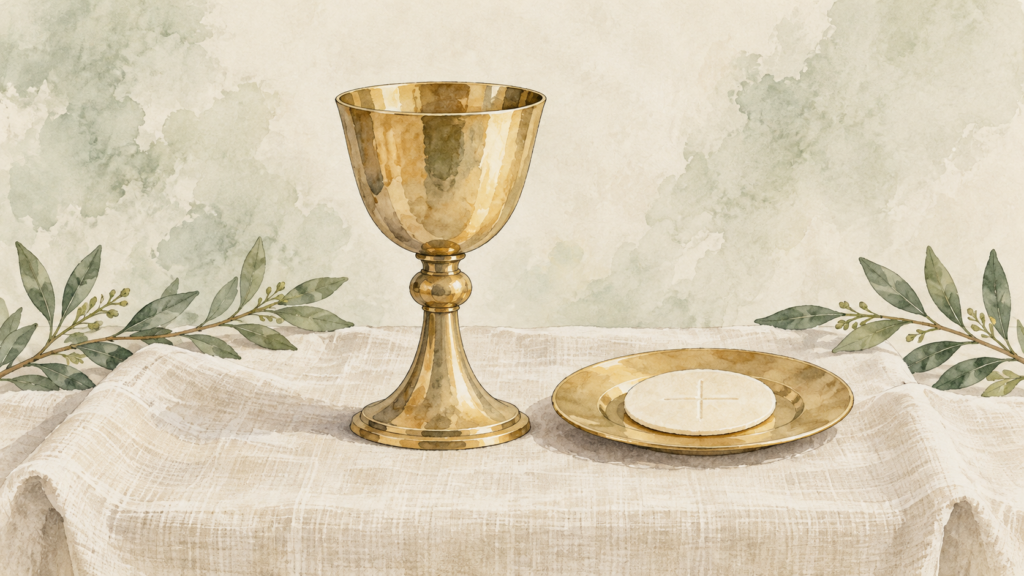
At Holy Communion, bread and wine are brought to the table. The congregation hears the account of Jesus giving bread and wine to the disciples, and people come forward to receive. What are Christians expecting to receive?
The 1662 Prayer Book answers that question in its Catechism. It calls bread and wine the outward sign, and Christ’s Body and Blood the inward gift received by the faithful.
It describes the benefit as the strengthening and refreshing of our souls. Communion concerns what Christ gives us as well as what we remember.
Remembering with bread and wine
The Communion service recalls Christ’s death for us and gives thanks for its saving benefits. The Prayer of Consecration speaks of the sufficiency of Christ’s sacrifice on the cross. The Church does not need to supply something missing from it.
When the bread is given, the words join remembrance to receiving: “feed on him in thy heart by faith with thanksgiving”. We come trusting Christ and receiving spiritual nourishment, with gratitude for a gift we cannot earn.
Coming to the same table
That trust has consequences for how we treat one another. In 1 Corinthians 11:17–34, Paul describes a divided gathering where some have plenty while others go hungry. He challenges the humiliation of people who have nothing, then recalls the Lord’s Supper.
Preparation for Communion includes examining our lives and attending to relationships. The Prayer Book calls us to repentance, faith in God’s mercy and love of our neighbours. Our guide to shared confession explores that part of worship.
If you have been treating someone at church as though their presence does not matter, preparation may begin with how you greet and listen to them.
You do not have to achieve a flawless life before approaching God. The prayer before receiving places our confidence in God’s mercy.
What follows receiving?
The service’s prayers after Communion give thanks for spiritual food and ask for grace to continue in fellowship and good works. Receiving leads back into ordinary life: the people we meet, the responsibilities we carry and the care we can offer.
If you are new to Communion, or unsure about preparing to receive at Christ Church, speak with the clergy. They can explain the parish’s practice and talk through your questions before a service.