What is the Magnificat?
Hear Mary’s song at Evensong: its biblical setting, words about mercy and power, and place in the 1662 Book of Common Prayer.
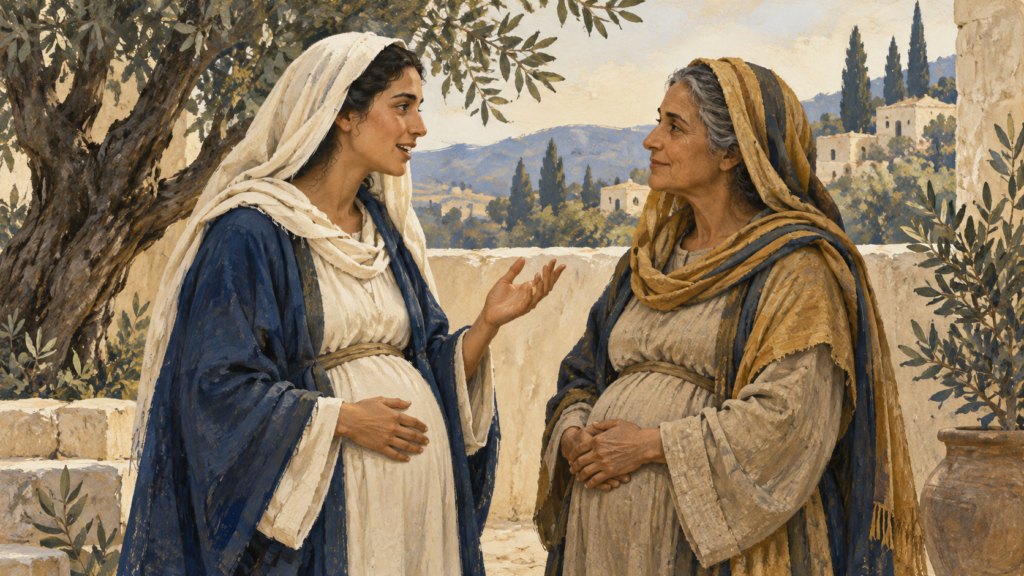
The Magnificat is Mary’s song of praise in Luke 1:46–55. Its name comes from the Latin opening, meaning “magnifies”. In the 1662 Book of Common Prayer it begins, “My soul doth magnify the Lord”. To magnify God here is to proclaim God’s greatness.
At Choral Evensong at Christ Church North Adelaide, the choir sings these words. Following their meaning can change what we hear in the music: Mary’s praise has something to say about hunger, power and the promises of God.
Mary speaks
Luke places the song within Mary’s visit to Elizabeth. Elizabeth welcomes her and blesses her faith. Mary responds by rejoicing in God her Saviour and recognising what God has done for her.
Mary names God’s mercy and interprets what is happening. When the choir takes up her song, the congregation hears a woman giving voice to the hope of Israel.
The song also recalls another woman’s prayer. In 1 Samuel 2, Hannah rejoices in God and speaks of the hungry being fed and the poor raised up. Hearing that echo places Mary’s praise within the prayer and hope of Israel.
From one life to a changed order
The song’s reach widens. Mary speaks of mercy across generations, then of the proud scattered, rulers brought down and the lowly lifted up. Hungry people receive good things; the rich are sent away empty.
Those contrasts can be uncomfortable. It is tempting to hear only a promise of inward comfort, but the song names people whose circumstances are unequal. Its praise reaches into how power is held and whose needs are met.
The words leave questions to carry beyond the service. Whose hunger have we stopped noticing? Where do we treat status as a measure of a person’s worth?
The closing lines remember God’s help for Israel and the promise to Abraham and his descendants. The song ends with faithfulness stretching across generations. It should not be detached from those Jewish roots when Christians sing it.
Finding the words at Evensong
In 1662 Evening Prayer, the Magnificat follows the Old Testament lesson; the book also provides an alternative canticle. The Nunc Dimittis, Simeon’s song, comes after the second lesson. They are different voices within the service.
The Prayer Book’s language may need a little attention. “Holpen” means helped. When the music stretches a phrase over several bars, look back at the sentence in the service booklet rather than trying to catch every syllable at once.
CCNA’s Evensong page includes a recording of Charles Wood’s Magnificat in D sung at Christ Church. Listen with the words nearby. Notice where Mary’s personal thanksgiving opens out towards other people, and what that widening asks of your own prayer.