Why do Anglicans stand, sit and kneel?
Standing, sitting and kneeling can help us participate in worship. A short guide for visitors, including what to do when a posture is difficult.
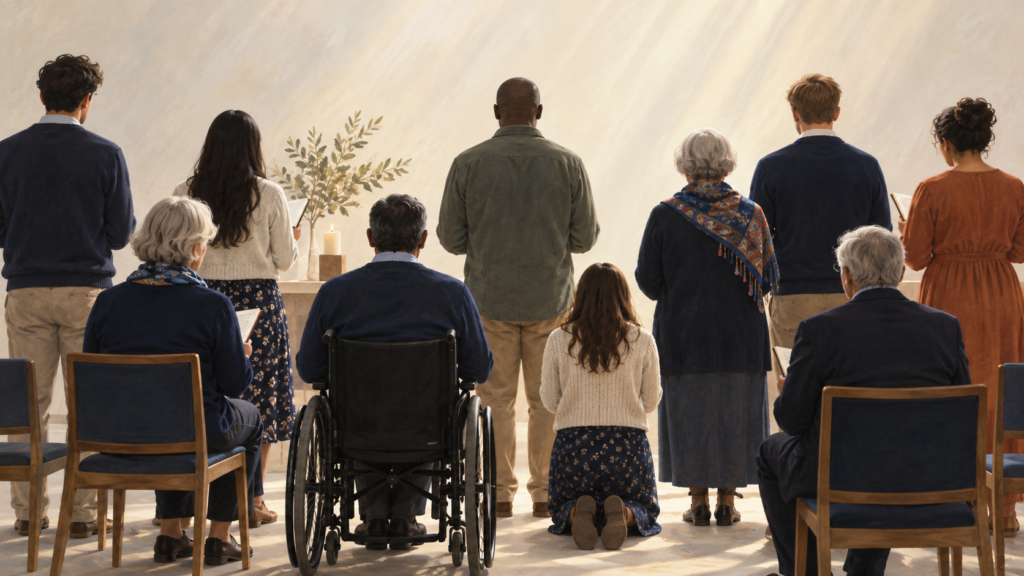
You have just found your place in the service when everyone starts moving. Standing, sitting and kneeling can be bewildering on a first visit, especially when you are also following unfamiliar words.
These postures give bodily expression to worship. They are not a test of how quickly you can copy the people nearby.
| Posture | What it can express |
|---|---|
| Standing | Attentiveness, praise or a shared profession of faith. The 1662 Morning Prayer rubric directs the congregation to stand for the Apostles’ Creed. |
| Sitting | A settled posture for listening, often during lessons or a sermon. Exact practice varies with the service. |
| Kneeling | Humility and dependence in prayer. The Prayer Book directs kneeling for the general confession in Morning Prayer. |
Those examples are starting points, not a rule that every prayer must be kneeling or every reading sitting. The printed directions in a service are called rubrics. Local customs also shape what you see.
If a posture is difficult
Remain in a position you can manage. Pain, fatigue, balance and mobility needs are not measures of devotion. You can join the prayer while seated. You do not owe the people around you an explanation.
The Church of England’s guidance on learning to pray recognises that prayer can be offered in different comfortable positions. Bodily participation should help attention, not turn it into an endurance exercise.
Finding your way at Christ Church
Christ Church provides a printed order of service, and a welcomer can help you follow it. Ask before the service if there is a direction you do not understand. If you miss a change, simply rejoin when you can.
The Visit Us page gives current access information and a way to make contact about particular needs. You are welcome to take time to become familiar with worship.