What is the Nunc Dimittis?
Simeon’s song belongs to an encounter in the Temple. Discover the hope and coming sorrow behind the words we hear at Evensong.
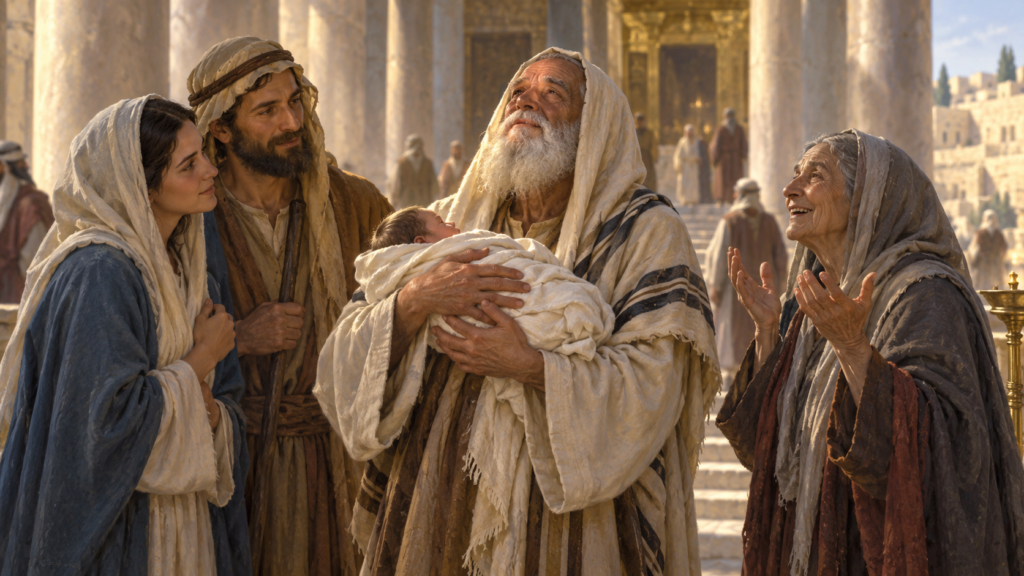
After the New Testament reading at Choral Evensong, the choir sings words spoken by someone holding a child. The Nunc Dimittis is Simeon’s song in Luke 2:29–32. In the Book of Common Prayer, it begins with his request to depart in peace.
At Christ Church North Adelaide, we hear this song alongside Mary’s Magnificat. To understand Simeon’s peace, it helps to return to the encounter behind the music.
A promise held in his arms
In Luke’s account, Mary and Joseph bring Jesus to the Temple in Jerusalem. Simeon has been waiting for the consolation of Israel. The Holy Spirit has assured him that he will see the Messiah before he dies.
When the family arrives, Simeon takes Jesus in his arms and blesses God. What he has awaited is now before him. The words about departing in peace concern the fulfilment of that promise and his readiness for death. They are more than a pleasant farewell at the end of an evening.
Anna, a prophet who worships in the Temple, also recognises the significance of the child. She gives thanks and speaks about Jesus to others waiting for Jerusalem’s redemption.
Peace, with sorrow still ahead
The song identifies Jesus as God’s salvation, prepared for all peoples. It names both the Gentiles and Israel: the nations will receive light, and Israel will receive glory. Christian worship should preserve that connection with Israel’s hope rather than treating it as something left behind.
Then Simeon speaks to Mary about opposition and suffering. The scene does not end with everything settled. His peace can coexist with knowledge that the child’s life will be costly and that Mary will know sorrow.
This matters when we hear the canticle after a difficult day. We do not have to describe the day as good before joining the Church’s thanksgiving for Christ. Nor does the song require us to feel calm on command.
Following the song at Evensong
In 1662 Evening Prayer, the Nunc Dimittis follows the second lesson; a psalm is also provided as an alternative. The choir’s singing gives the congregation time to attend to Simeon’s words.
Find the canticle in your service booklet before the music begins. As you listen, follow what Simeon has seen and whom the salvation is for. If one phrase stays with you, return to Luke 2 during the week and read the words that surround it. You may hear more in the music next time.